If your teeth look longer than they used to, feel sensitive when you sip something cold, or you notice a notch forming where the gum meets the tooth, you may be seeing the early signs of gum recession. It’s one of the most common — and most overlooked — dental concerns we see at Grafton Dental Care, and the good news is that when it’s caught early, it’s very treatable.
Dr. Anurag Gupta and our team have helped many patients in Grafton, Worcester, and the surrounding MetroWest communities restore receding gums, protect their teeth, and bring back a confident smile. In this guide, we’ll walk through a real case Dr. Gupta recently completed using connective tissue grafting, then explain what causes gum recession, why ignoring it is risky, and the treatment options available.
A Real Case: Connective Tissue Grafting at Grafton Dental Care
One of the most rewarding procedures Dr. Gupta performs is connective tissue grafting. The result is immediately visible — the exposed root disappears, the gumline returns to a healthy contour, and sensitivity goes away. The before-and-after photos below come from a recent case Dr. Gupta completed in our Grafton office.
The patient came in concerned about how long the teeth looked along the front of the smile and persistent cold sensitivity at the gumline. On exam, Dr. Gupta found classic recession with exposed root surfaces, thin overlying gum tissue, and visible cervical notching. After reviewing the tissue thickness, bone levels, and the patient’s brushing habits, Dr. Gupta recommended a connective tissue graft to cover the exposed roots and rebuild a thicker, more protective band of gum tissue.
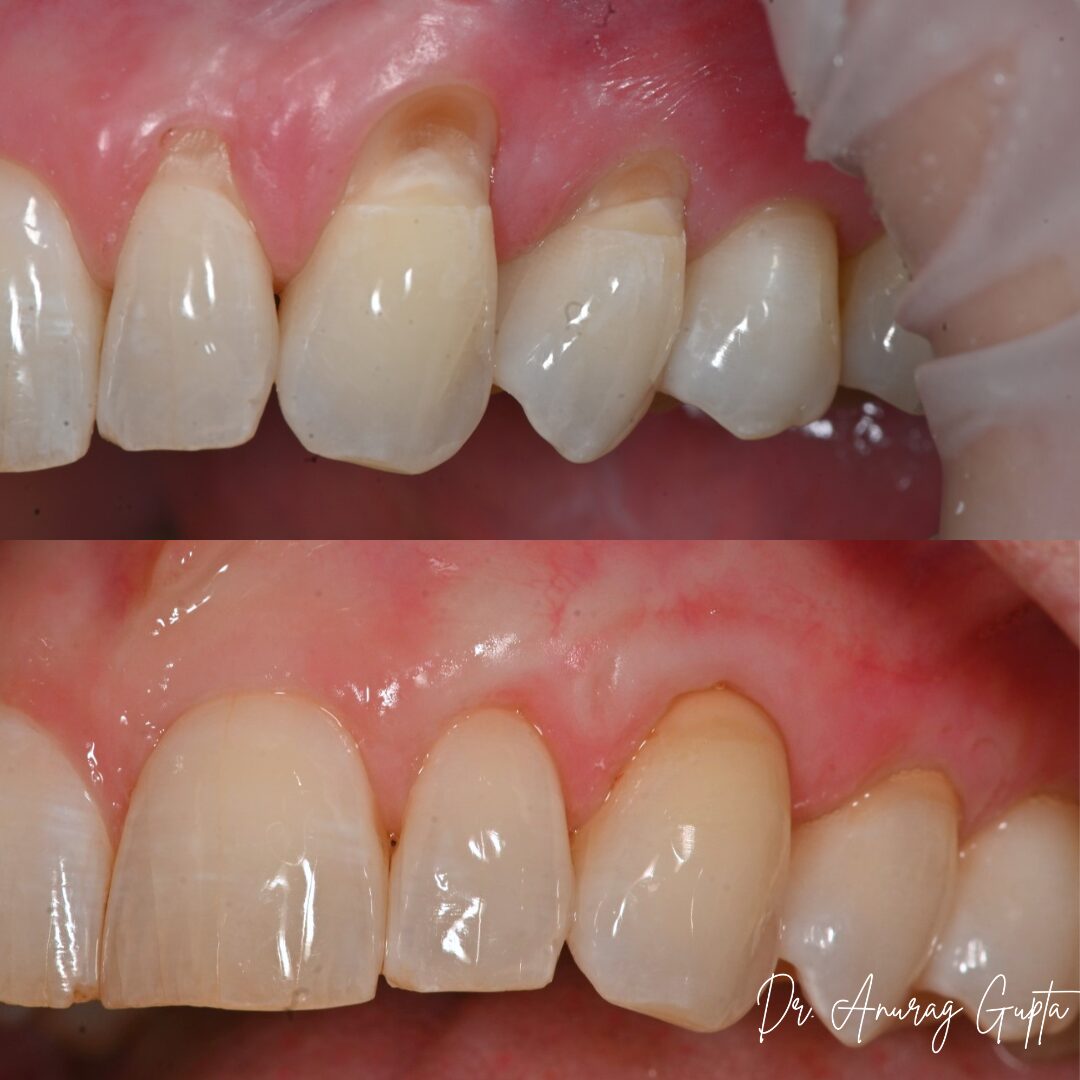
During the procedure, Dr. Gupta harvested a thin layer of connective tissue from beneath the surface of the palate and tunneled it under the existing gum to cover the exposed roots. This technique lets the donor area heal quickly while the grafted site gains both root coverage and tissue thickness.
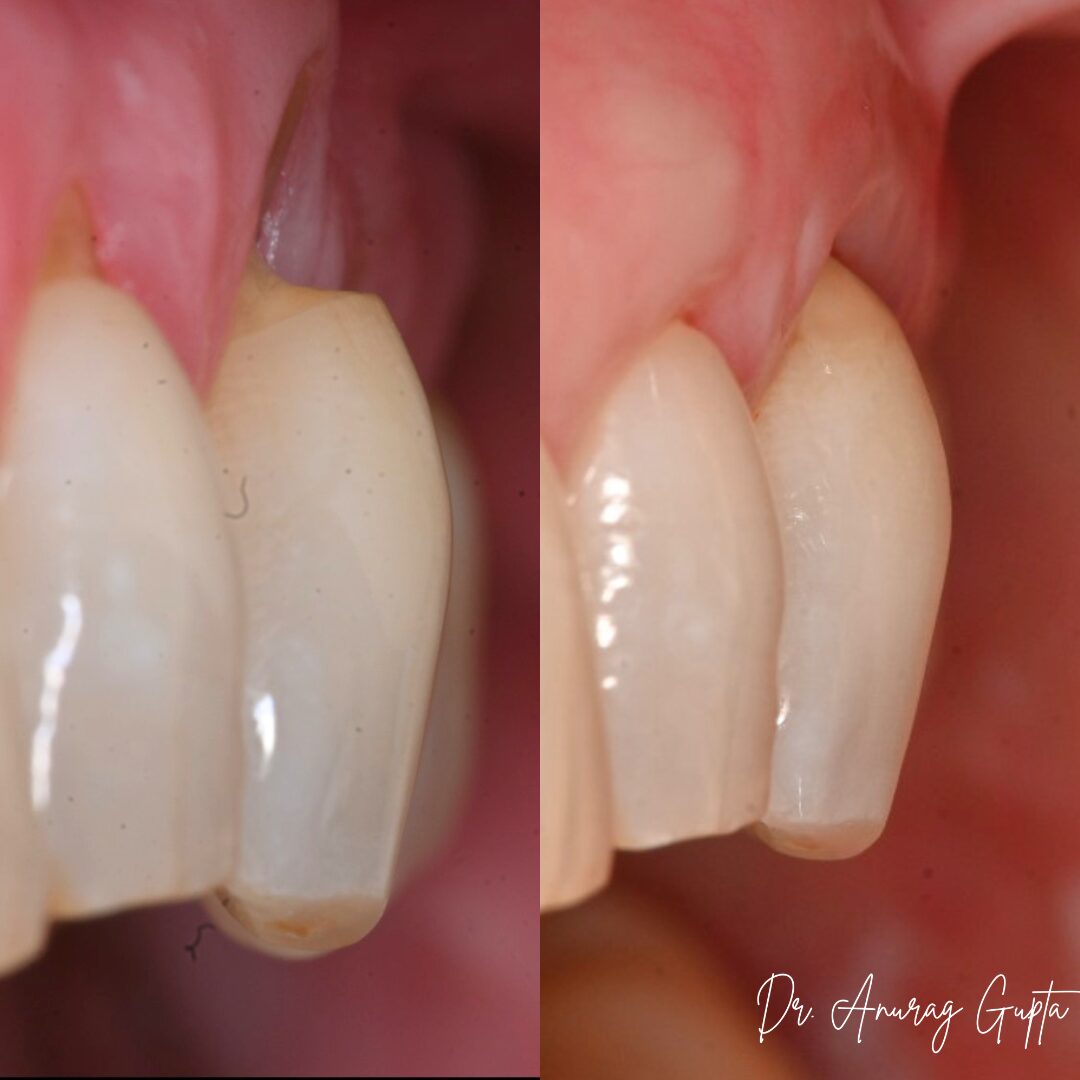
Healing went smoothly. Within a few weeks the new tissue had integrated, sensitivity was gone, and the patient’s smile looked balanced again. The new tissue is also thicker and more resistant to future recession — and in most patients, results like this tend to be long-lasting.
With that case in mind, the sections below walk through what gum recession actually is, what causes it, why it’s important to treat, and the full range of treatment options available — from conservative non-surgical care to advanced grafting.
What Is Gum Recession?
Gum recession is the gradual pulling back of the gum tissue from around your teeth, exposing more of the tooth — and sometimes the root. Healthy gums form a tight, scalloped collar around each tooth. When that collar shrinks, the tooth looks longer, the root becomes visible, and a wedge-shaped notch often appears at the gumline.
Recession can happen on a single tooth or across many teeth. It’s usually slow and painless, which is why most people don’t notice it until sensitivity sets in or a hygienist points it out at a routine cleaning.
What Causes Gum Recession?
Gum recession rarely has just one cause — it’s typically a combination of factors working together over time. Here are the most common drivers we see in our Grafton patients.
Mechanical and habit-related causes
1. Aggressive brushing. This is the single most common cause. Using a hard-bristled toothbrush, scrubbing back and forth, or pressing too hard can physically wear away the delicate gum tissue and the enamel underneath. The damage is usually worse on the upper canines and premolars — the teeth that stick out the most.
2. Grinding and clenching (bruxism). Constant pressure on the teeth from grinding flexes the tooth at the gumline. Over years, the constant flexing causes small fractures in the enamel and stresses the surrounding gum, which slowly pulls the gum down.
3. Tobacco use. Smoking and chewing tobacco starve the gums of blood supply, accelerate periodontal disease, and slow healing — a triple hit on gum health.
Biological and disease-related causes
4. Periodontal (gum) disease. Chronic gum infection breaks down the bone and soft tissue that anchor your teeth. As the bone shrinks, the gum tissue follows, and recession sets in. This type of recession often comes with bleeding gums, bad breath, and loose teeth.
5. Thin gum tissue (thin biotype). Some people are simply born with naturally thin gum tissue. Thin gums are more fragile and more prone to recession from even normal brushing and flossing. Genetics play a real role here.
6. Age and hormonal changes. Cumulative wear, dry mouth from medications, and hormonal shifts (especially around menopause) all make older gums more vulnerable to recession.
Treatment-related causes
7. Orthodontic movement. Moving teeth through the bone — especially outward or into a position where the bone is thin — can cause the gum on that side to recede. This is one reason post-orthodontic patients sometimes notice new recession years after braces.
Several of these factors often stack. For example, a patient with thin tissue who brushes hard and clenches at night may see recession progress quickly even with good oral hygiene.
Long-Term Effects of Untreated Gum Recession
Gum recession is more than a cosmetic issue. Left alone, it can lead to several serious problems:
Tooth sensitivity. The root surface has no enamel — cementum covers it instead, which is much softer and more porous. Once the root is exposed, hot, cold, and sweet foods can trigger sharp pain.
Root decay. Cementum decays faster than enamel, so exposed roots are at high risk for cavities. Root cavities are also harder to restore because they sit at or below the gumline.
Bone loss. Gum recession often comes with loss of the underlying bone. Once that supporting bone is gone, it does not regenerate on its own, and the tooth’s long-term stability suffers.
Tooth mobility and loss. In advanced cases — especially when periodontal disease drives the recession — teeth can loosen and eventually fall out.
Esthetic concerns. Long teeth, dark triangles between teeth, and visible yellow roots can make patients self-conscious about smiling.
Compromised future treatment. Recession around teeth planned for crowns, veneers, or implants makes those restorations harder to design and less predictable. Treating recession early protects future dental work, too.
Treatment Options for Gum Recession
The right treatment depends on how much recession is present, what’s causing it, and the goals of the patient. Dr. Gupta tailors every treatment plan after a careful exam, periodontal measurements, and a discussion about lifestyle factors.
Non-Surgical Treatments for Gum Recession
For mild recession, non-surgical approaches are usually the first step and can stop the progression in many patients:
- Brushing technique correction — switching to a soft-bristled or electric toothbrush with a pressure sensor often stops further damage in its tracks.
- Desensitizing treatments — in-office varnishes and prescription toothpastes can dramatically reduce sensitivity from exposed roots.
- Occlusal (bite) guards — a custom night guard relieves the grinding forces that contribute to recession and tooth wear.
- Periodontal therapy — deep cleaning (scaling and root planing) controls active gum disease and stabilizes the tissue before any grafting is considered.
Surgical Treatment Options for Gum Recession
Surgery becomes important when the root is exposed, sensitivity is severe, or recession is progressing. The most common procedures include:
- Connective tissue graft (CTG) — a leading option for covering exposed roots. Dr. Gupta takes a thin layer of connective tissue from under the surface of the palate and places it at the recession site. Because the tissue comes from beneath the surface, the donor area heals comfortably while the grafted area gains both thickness and root coverage.
- Free gingival graft — Dr. Gupta takes a small piece of tissue directly from the palate and places it at the recession site. This works best when the priority is thickening thin tissue rather than covering an exposed root.
- Pinhole surgical technique — a minimally invasive approach. Dr. Gupta repositions the existing gum over the root through a small entry point, often using collagen membranes for support. Not every case qualifies, but for the right patient this technique offers excellent results with less downtime.
- Allograft or xenograft tissue — donor or processed tissue can replace palatal tissue, especially when multiple teeth need treatment and the patient prefers to avoid a palatal donor site.
Frequently Asked Questions About Gum Recession
The procedure and recovery
Can receding gums grow back on their own?
No. Once the gum has receded, the tissue does not regenerate naturally. The goal of treatment is to stop further recession and, when appropriate, surgically replace the lost tissue with a graft. The earlier recession is addressed, the more treatment options remain available.
Is connective tissue grafting painful?
Most patients describe the procedure itself as comfortable — it’s performed under local anesthesia, and many patients say it was easier than they expected. Post-operative soreness is typically mild and well-controlled with over-the-counter pain relievers. The palate (donor site) is usually the most sensitive area for a few days and heals fully within two to three weeks.
How long does gum graft surgery take to heal?
Initial healing takes about one to two weeks, with soft food recommended during that time. The new tissue continues to mature and integrate over the following two to three months. Final esthetic results are usually visible at the three- to six-month mark.
Cost and insurance
How much does a gum graft cost?
The cost of a connective tissue graft depends on how many teeth are involved, the type of graft used, and your dental insurance coverage. At Grafton Dental Care, we provide a detailed estimate after the exam and work with most insurance plans to maximize benefits. Financing options are available.
Will my insurance cover gum grafting?
Many dental insurance plans cover a portion of periodontal procedures like gum grafting, especially when there is documented sensitivity, root exposure, or risk of further damage. Our team verifies your benefits before treatment so you know what to expect.
Prevention
How can I prevent gum recession from getting worse?
Switch to a soft-bristled toothbrush, brush gently using small circular motions, floss daily, treat grinding with a night guard, avoid tobacco, and keep up with regular dental cleanings so recession can be monitored and treated early.
Treating Gum Recession in Grafton, MA at Grafton Dental Care
If you’ve noticed your teeth looking longer, increased sensitivity, or an exposed root surface, don’t wait — early treatment offers more options and better results. Dr. Anurag Gupta and the team at Grafton Dental Care offer comprehensive evaluation and treatment for gum recession, from conservative non-surgical care to advanced connective tissue grafting, all under one roof in Grafton, MA.
Call us at 508-318-4477 or schedule a consultation online to find out which treatment is right for you.