By Dr. Anurag Gupta, DMD · Grafton Dental Care, Grafton, MA
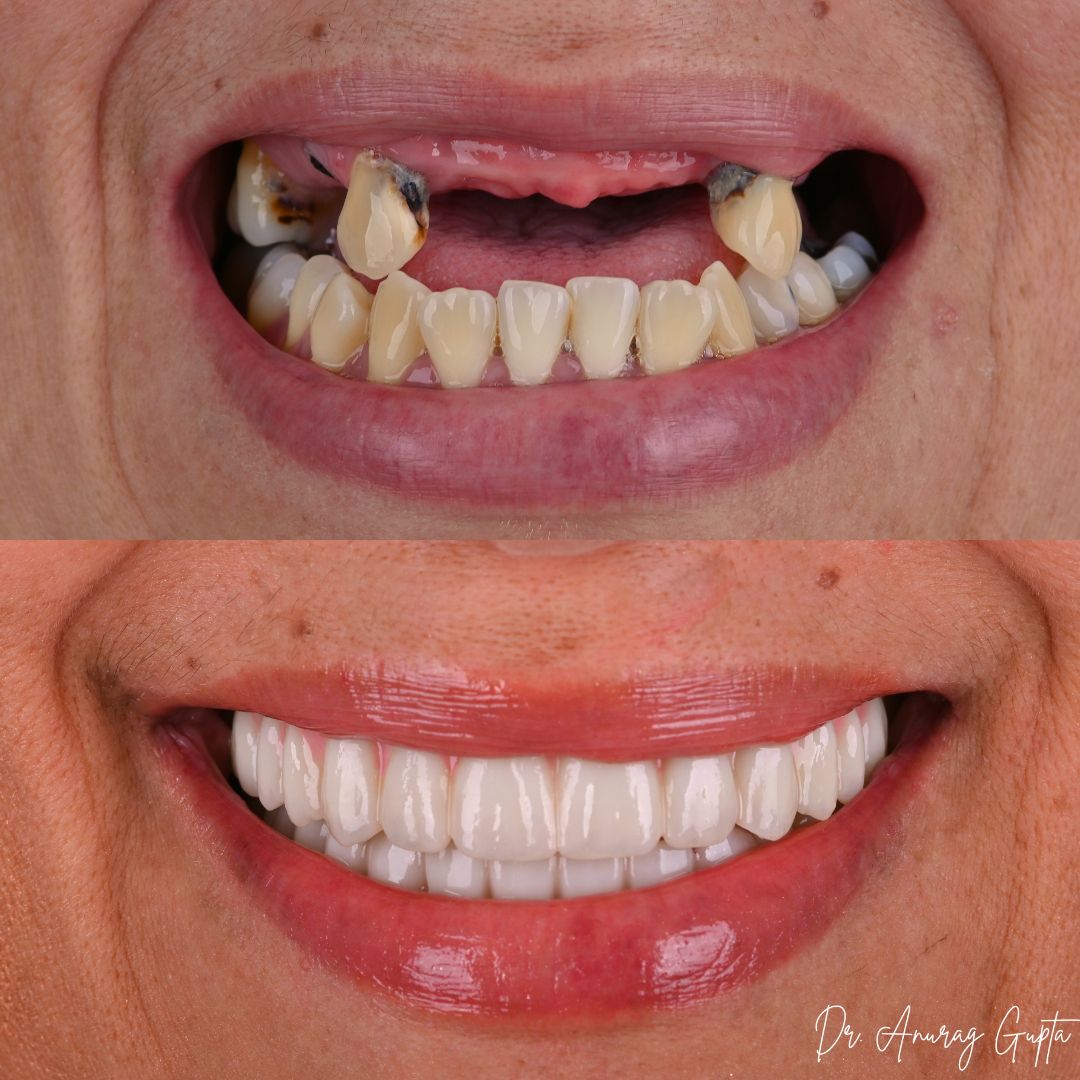
Some of the most rewarding cases at Grafton Dental Care are full-arch implant cases where the patient has lived with failing teeth, a compromised smile, and a bite that has gradually drifted out of alignment over years. This guide walks through a recent nXtsmile All-on-X case Dr. Anurag Gupta completed at our Grafton, MA office. The patient had missing upper teeth, advanced gum disease in the teeth that remained, and a bite that no longer functioned because the lower jaw had grown forward over time.
This case shows what is possible when we plan full-arch implants not just to replace teeth, but to restore proper bite alignment, facial support, and a natural smile. Below, we share the case, explain why a full-arch approach made sense for this patient, and walk through how a bite discrepancy changes the planning of an All-on-X case.
A Complex Full-Arch Case at Grafton Dental Care
The patient came to our practice looking for a permanent solution. Several of her upper teeth were missing. Advanced periodontal disease had compromised the teeth that remained on top, and Dr. Gupta determined they could not support restorative work. Her lower teeth showed years of wear from an uneven bite. Years of missing upper teeth had also caused her lips and facial profile to collapse inward — a change patients often notice but cannot put into words.
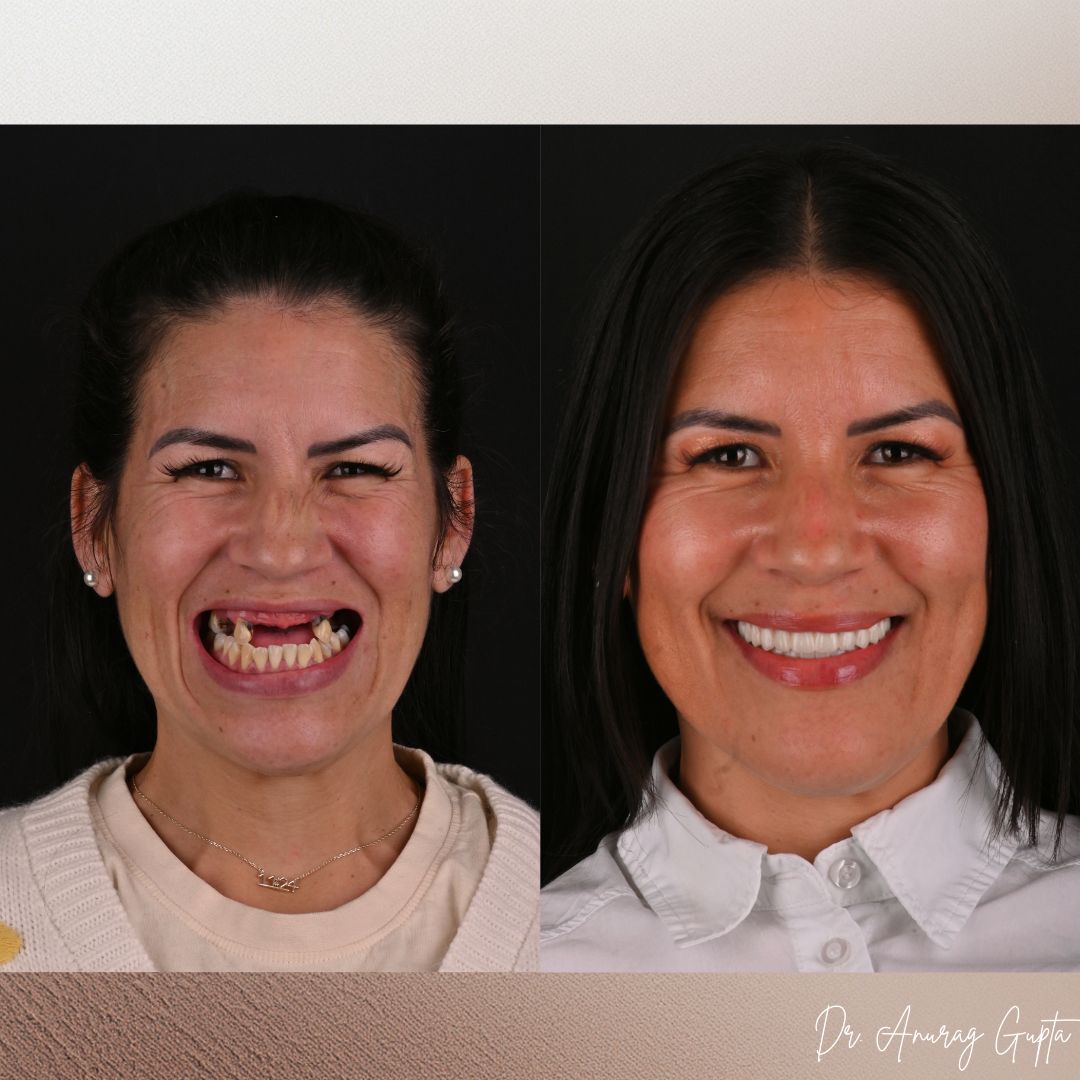
After a thorough clinical exam and 3D CBCT imaging, Dr. Gupta confirmed three issues working against this patient at once. First, the failing upper teeth needed to come out and could not support any restorative work. Second, the lower jaw had developed forward over time, leaving the bite in a reverse position. And third, the years of tooth loss had reduced the vertical height of her face, contributing to the collapsed lip appearance.
The treatment plan: full-arch nXtsmile All-on-X implants on both the upper and lower jaws, with the prosthetic teeth designed to restore proper bite alignment and rebuild the vertical facial dimension that years of tooth loss had taken away.
The result: a corrected bite, a restored smile, and a natural facial profile
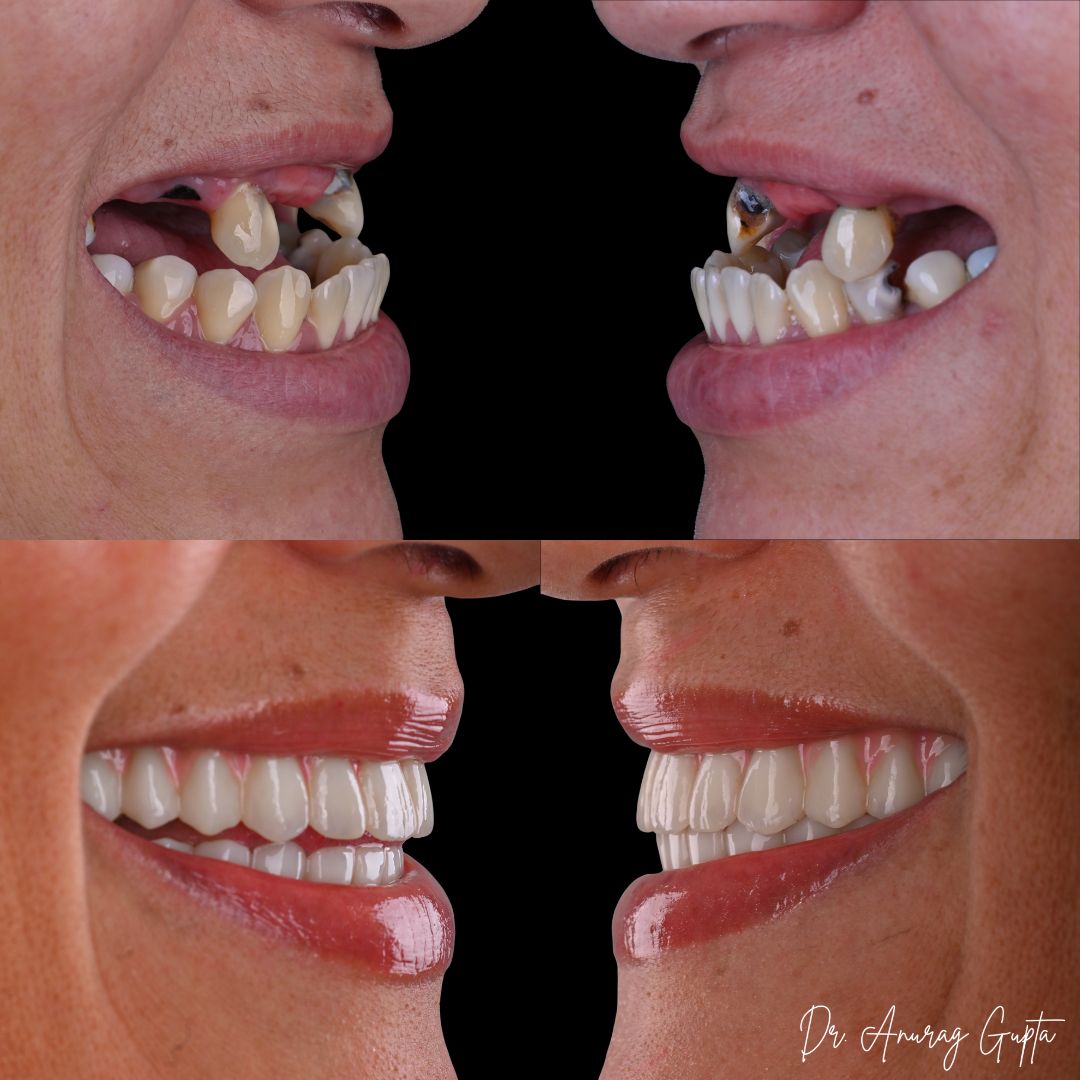
The side-view photos tell the structural story. Before treatment, the lower teeth sat forward of the upper teeth because of the lower jaw growth pattern and years of upper tooth loss. The bite had no stable position. After treatment, Dr. Gupta positioned the upper full-arch prosthesis slightly forward of where her natural upper teeth had been. This restored proper overbite and overjet. He then designed the lower prosthesis to settle into a comfortable, stable bite against the new upper teeth.
Below, we walk through why a full-arch approach was the right solution for this case, how a bite discrepancy changes implant planning, and the treatment process from start to finish.
Why a Full-Arch Approach Was the Right Solution
When a patient has multiple failing teeth with advanced gum disease, the temptation can be to try to save what’s left and add a few single tooth implants here and there. That approach often fails, because:
- Periodontal disease compromises the foundation. Teeth with severe bone loss from gum disease cannot reliably support crowns or bridges, and the disease can spread to implants placed near them.
- A mixed restoration ages poorly. When some teeth are natural and some are implant-supported, the natural teeth continue to wear, shift, and develop new disease while the implants stay fixed. The bite drifts out of harmony.
- Repeated treatment compounds cost over time. Saving a few teeth that fail in a year or two often costs more than starting fresh with a stable full-arch solution.
For this patient, removing all of the failing upper teeth and replacing them with a full-arch nXtsmile All-on-X prosthesis gave her a stable, disease-free foundation. The same applied to the lower arch, which had worn down and become unstable from years of compensating for the failing upper teeth. A full-arch approach on both upper and lower allowed Dr. Gupta to design a complete bite from scratch.
How a Bite Discrepancy Changes Full-Arch Implant Planning
This is the part of the case that separates routine All-on-X work from a complex full-arch reconstruction. A bite discrepancy — in this patient’s case, a lower jaw that had grown forward beyond a normal relationship with the upper jaw — changes everything about how Dr. Gupta plans the implants and the prosthetic teeth.
Designing the bite, not just the smile
Most full-arch implant cases focus on replacing teeth in their existing position. When the bite is already off, that approach locks in the problem. The new teeth fit into a bite that doesn’t function properly, and the patient continues to have the same chewing problems, jaw discomfort, and uneven wear patterns that contributed to her tooth loss in the first place.
For this case, Dr. Gupta started with a different question: what would a healthy bite look like for this patient, and how should the new teeth be positioned to achieve it? Three planning steps made the difference.
1. Dr. Gupta restored vertical dimension first. Years of tooth loss had reduced the height of the patient’s lower face, which contributed to the collapsed lip appearance and an over-closed bite. Dr. Gupta planned the new prostheses to restore the proper vertical height the patient had years ago, before she lost the teeth.
2. Dr. Gupta positioned the upper prosthesis forward of the original tooth position. Because the lower jaw had grown forward, simply replacing the upper teeth where they used to be would have left the bite in a reverse relationship. Instead, Dr. Gupta designed the upper prosthesis slightly forward of the original tooth position. This restored a normal overbite and overjet against the lower teeth.
3. Dr. Gupta designed the lower prosthesis in harmony with the new upper. The lower full-arch implant teeth then settled into a stable, comfortable bite against the new upper teeth. The two prostheses work as a system.
Why this matters for the patient long-term
Patients who get full-arch implants without bite correction often come back years later with problems: cracked prostheses, jaw soreness, headaches, uneven wear. Designing the bite correctly from the start gives the prostheses the best chance of lasting and the patient the best chance of comfortable, functional chewing for decades.
The Treatment Process: From Failing Teeth to a Full New Smile
The full-arch implant process took several visits over a few months. Here is what happened, in stages.
Stage 1 — Planning and 3D imaging
Dr. Gupta evaluated the patient with a clinical exam, full mouth radiographs, and a 3D CBCT scan. The CBCT mapped the bone available for implant placement on both the upper and lower jaws. Digital planning then determined the ideal implant positions for each arch and the design of the temporary and final prostheses.
Stage 2 — Surgery: extractions and implant placement
In a single surgical visit, Dr. Gupta removed all of the failing upper teeth, addressed the periodontal disease, and placed the implants for the upper full-arch prosthesis. The lower extractions and implants followed the same protocol. Where needed, Dr. Gupta added bone grafting material to fill extraction sockets and stabilize the implants. For patients who also need a sinus lift to rebuild upper bone, Dr. Gupta plans that step into the same surgical visit.
Stage 3 — Same-day temporary teeth
The patient left our office the same day with a temporary upper and lower implant prosthesis in place. She was never seen in public without teeth. The temporaries also let her start adapting to the new bite and the new vertical dimension during healing.
Stage 4 — Healing and integration
Over the following months, the implants integrated with the surrounding bone (osseointegration) while the patient wore the temporary teeth. Dr. Gupta monitored healing at follow-up visits and made small adjustments to the temporaries as needed.
Stage 5 — Final prosthesis
Once the implants had fully integrated, the patient received the final upper and lower nXtsmile All-on-X prostheses — designed in the corrected bite position, with restored vertical dimension, and matched to her facial features for a natural smile.
Why Patients Choose nXtsmile All-on-X at Grafton Dental Care
nXtsmile is our full-arch implant program for patients who need to replace an entire arch of teeth. The program centers on three things. First, complete planning using 3D imaging and digital case design. Second, experienced surgical and restorative care from Dr. Anurag Gupta and our team. Third, same-day teeth so patients never go through life without a smile.
What sets the nXtsmile approach apart for complex cases like this one is our willingness to address bite, facial support, and long-term function — not just replace the missing teeth. Many patients arrive here after other practices told them their case was too complicated, or after another office quoted an oversimplified treatment plan. They often find a different answer here.
Learn more about nXtsmile All-on-X →
Frequently Asked Questions About Full-Arch Dental Implants
The procedure and timeline
How long does a full-arch dental implant case take from start to finish?
Most full-arch implant cases take four to six months from the initial surgery to the final prosthesis. Patients receive a temporary set of teeth on the day of surgery, so they are never without a smile during healing.
Is full-arch implant surgery painful?
Dr. Gupta performs the surgery under local anesthesia, often combined with sedation for patient comfort. Most patients describe the recovery as easier than expected. Post-operative soreness responds well to prescribed and over-the-counter medications, and most patients return to normal activity within a few days.
Can a bite problem be corrected during full-arch implant treatment?
Yes. When a patient has a bite discrepancy in addition to missing teeth, the full-arch implant prostheses can be designed to restore proper bite alignment, vertical facial dimension, and lip support. This is especially important when the lower jaw has shifted forward or the patient has lost vertical height from years of tooth loss.
Eligibility and outcomes
Am I a candidate for full-arch dental implants?
Most adults who are missing many teeth or have a failing dentition are candidates for full-arch implants. A consultation with 3D CBCT imaging confirms bone availability, gum health, and the overall plan. Patients with controlled medical conditions, including diabetes, are often still good candidates with appropriate planning.
Will the new teeth look natural?
The final nXtsmile All-on-X prosthesis is custom-designed to match the patient’s facial features, smile line, and skin tone. The result is a complete smile that looks balanced and natural in the face — not the bulky or artificial appearance some patients fear when they hear “full-arch implants.”
How long will my full-arch implants last?
Long-term studies report success rates above 95% at 10 years for well-placed dental implants, including full-arch cases. With good oral hygiene and regular dental visits, full-arch implants often remain in function for decades.
Full-Arch Dental Implants in Grafton, MA at Grafton Dental Care
If you have been told your case is too complex for traditional implant treatment, or you have lived with failing teeth, an uncomfortable bite, or a smile that no longer feels like yours, a consultation is the next step. Dr. Anurag Gupta and our team will examine your situation, take the 3D imaging needed to plan the case, walk through your options, and give you a complete cost estimate before any treatment begins.
Call us at 508-318-4477 or schedule a consultation online. Our team will answer your questions and help you decide what makes sense for your smile.
Patient photos shared with consent. Treatment outcomes vary based on each patient’s individual case, oral health, and adherence to post-operative care. The case described here reflects one patient’s experience and is not a guarantee of similar results. Final treatment plans and costs are reviewed at your consultation before any treatment begins.